

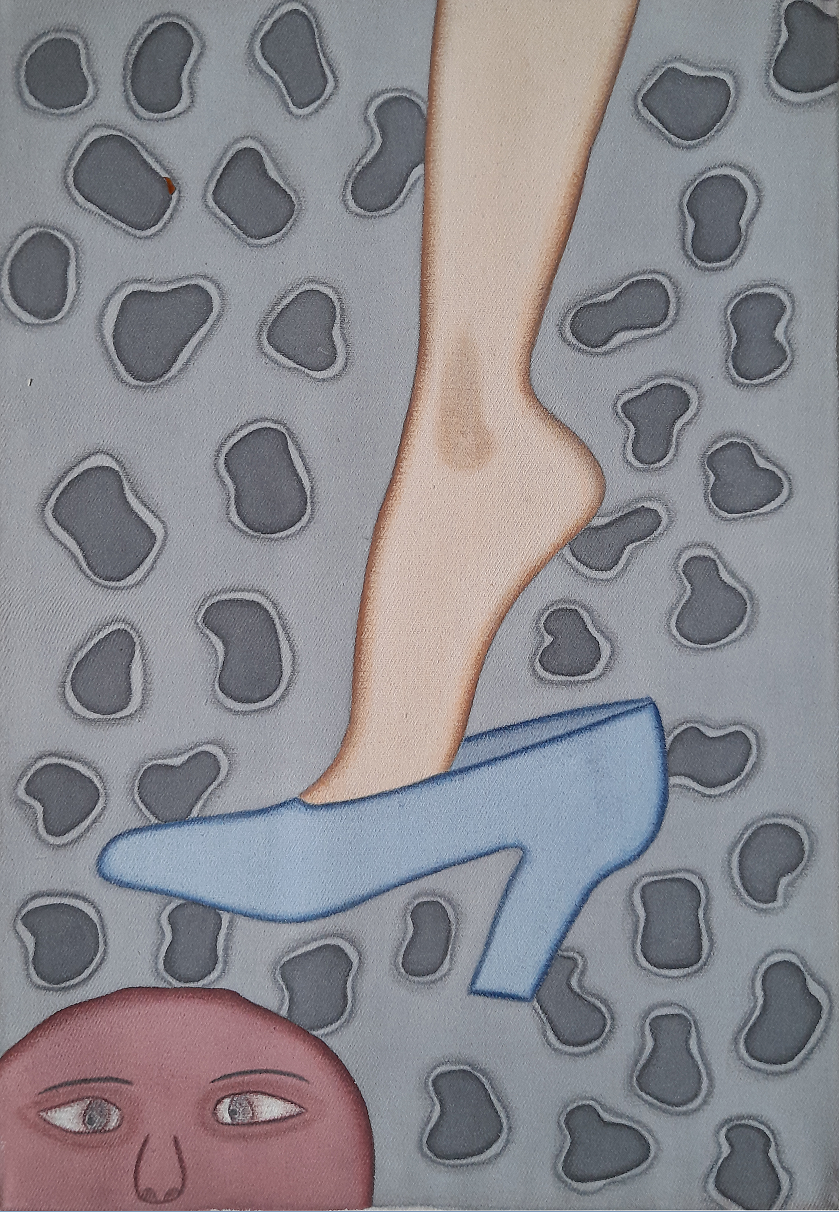
My Sepatu 9
About the Artist
Murni, born in Bali in 1966, experienced a tumultuous early life marked by hardship and resilience. Surviving sexual abuse from her father as a child, she navigated various jobs—domestic work in Ujung Pandang, seamstress in Jakarta, and jeweler in Bali—before embracing her true vocation as an artist. Initially influenced by the Pengosekan School under I Dewa Putu Mokoh, Murni developed a distinctive, self-taught style characterised by bold colours and strong, curved lines. Her art departed from traditional themes, delving instead into deeply personal subjects—her traumatic past and vivid dreams—rendered with humor and honesty through surreal and sometimes shocking imagery.
Murni's unorthodox art challenged societal norms and traditional Balinese values, particularly in its frank exploration of female sexuality and desire, which were taboo topics locally. Despite initial resistance from the conservative Balinese art community, the Seniwati Gallery recognised the power and uniqueness of her work, propelling her to international acclaim. Exhibitions in Hong Kong, Australia, and Italy broadened her audience, while back in Bali, she continued to push boundaries at venues like the Cemeti Art House, where her art was increasingly viewed not just as personal expression but also as a reflection of Indonesia's collective post-New Order trauma. Through her art, Murni not only confronted her past but also redefined what it meant to be a woman, a Balinese, and an artist, transcending stereotypes and paving the way for a more inclusive artistic dialogue.