

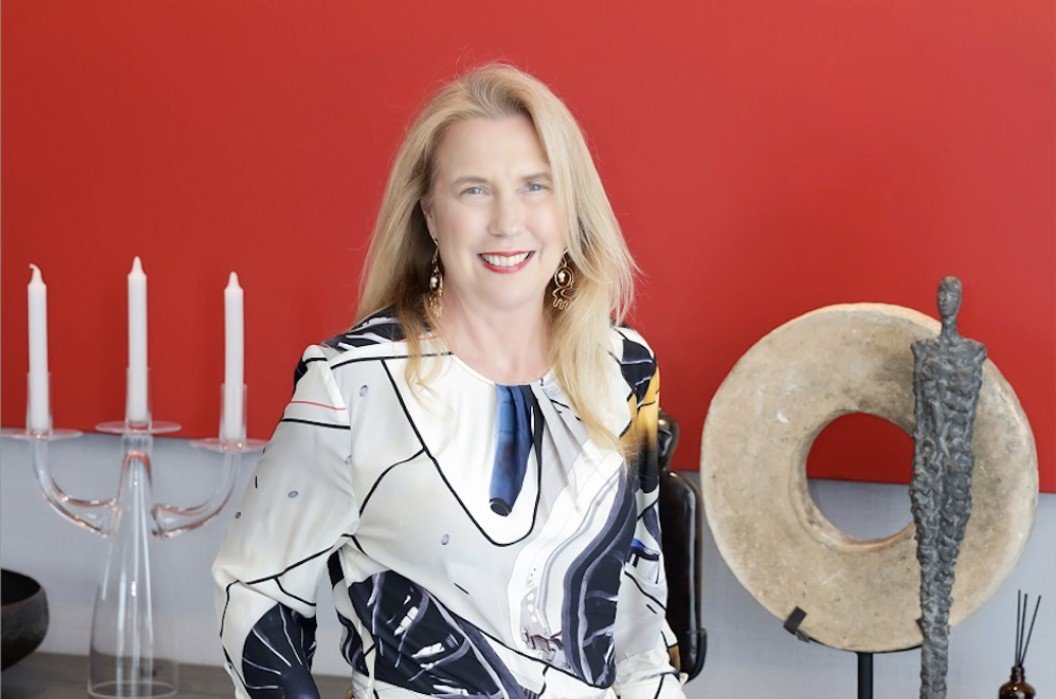
Deborah Iskandar: “Living with art you love is the most rewarding return on investment you can achieve.”
Founder of ISA Art and Design shares her journey in the art world
Deborah Iskandar is the Founder of ISA Art and Design with almost 30 years of art market experience under her belt. She officially entered the art world when she brought the international auction house Christie’s to Indonesia in 1996, and later joined Sotheby’s in 2009 as their Managing Director. In 2013, she started her independent advisory which assists private and corporate clients in sourcing artworks and building collections.
More recently, a physical space for ISA Art Gallery was established in 2020 with a focus on promoting the practices of women and Indonesian diaspora artists, as well as having an interest in new media art and the secondary market. S.E.A. Focus welcomed ISA Art Gallery’s participation for the first time in the 2024 edition with a presentation of works by A. Sebastianus Hartanto.
In addition to her role as a consultant and gallery owner, Deborah is a long-time collector. We had to ask how she plays these multiple roles and what are her observations on the Southeast Asian art market.

Your background is in finance law before entering the auction business in the 1990s. You have been an art consultant before establishing your own gallery in 2020. How have these worked out for you?
After leaving the auction house, I sought a moment to pause and reflect on the pace of the past 15 years. During this time, I had ventured into launching a startup that fused Indonesian luxury with art and design, driven by my passion for art and interior aesthetics, and my belief in living with art. Concurrently, I began art consulting to integrate art into architectural and interior projects. Often, I encountered clients with exquisite homes devoid of art due to time constraints or limited interest in acquiring works. Introducing this concept was slow-going in Indonesia initially; I started with just one or two projects annually, aligning with my desire for a more measured workload. Gradually, the momentum picked up.
Opening a gallery had not crossed my mind initially. While consulting, I discovered artists such as Sinta Tantra, Ida Lawrence, and Ines Katamso, whose works resonated deeply with me. Interestingly, my office was housed in my former residence, located in a flood-prone area of Jakarta. The upstairs space served as a workspace, while it remained vacant downstairs. Following a Feng Shui master advising me to “activate the downstairs”, the idea to open a gallery was sparked. Thus, on 3 March 2020, we inaugurated our new show, only to close two weeks later due to COVID-19. Despite the setback, the concept took root. We persisted through the pandemic, driven by a newfound passion to champion young Southeast Asian artists, particularly women—an under-represented niche in art collecting.

How would you describe your own collecting interests, and strategy, if any?
At heart, I am a collector. It began when I was 26, with my first painting purchase, and since then, my passion for collecting has only grown. My initial collection focused on non-conformist art from the former Soviet Union. I bought it during an art exhibition in Hong Kong. Later, I moved to Indonesia in 1991 and during my time at Christie’s from 1996 to 2007, my interests expanded to include Vietnamese and Indonesian modern art. For example, I was collecting works by Le Pho, Mai Trung Thu, and Vu Cao Dam, and eventually it evolved into a fascination with contemporary Asian art. I visited the studios of Agus Suwage, Yunizar, Masriadi, and Rudy Mantovani, among others, and I systematically started collecting works by the top contemporary artists like Arahmaiani, Heri Dono, Jompet Kuswidananto, and others.
Now, as a gallerist, I encounter numerous opportunities to acquire works by promising young Indonesian and Southeast Asian artists, continually enriching my collection.
Like many collectors will attest, it is more than a hobby; it is an addiction.

How do you usually advise your clients to collect, and how would the advice differ between a new collector, and for someone who has already built one?
When starting out as a collector, it is crucial to buy what you love and also what you can afford and, most importantly, to make informed decisions. Engage with gallerists, curators, and approach art with a discerning eye! I often advise new collectors to refrain from purchasing anything for the first six months because your taste will evolve as you immerse yourself in the art world and deepen your understanding.
For seasoned collectors, the pursuit never ends. Continuously explore and assess your collection to identify areas to enhance and fill gaps. As an auction house executive, I had the privilege of handling numerous exceptional private collections. The most successful sales came from collectors who meticulously curated their collections over a lifetime, creating narratives that spanned art history and told compelling stories.

In your opinion, what is an investment in art?
While I did not initially buy art as an investment, it has proven to be an exceptionally wise one. Art, as an asset, often requires holding onto for 20, 30, or even 40 years to see substantial returns. Beyond financial gains, art is meant to be cherished and experienced, not merely stored away. This belief led me to venture into consulting, placing art in public spaces such as hotels and private homes.
When acquiring art, conduct thorough research, but prioritise pieces that resonate personally. Living with art you love is the most rewarding return on investment.

Could you talk about your approach to designing a home/office/space for art?
Designing a home, office, or any space with art involves a creative and collaborative process that goes beyond mere decoration. It is fun! The selection of the art can determine the mood of the space, so it is an opportunity to imbue the space with personality and ambience, guided by the architectural and interior design context. Whether the person prefers minimalist, graffiti, contemporary, modernist, landscapes, or other styles, each choice reflects their personal taste and can communicate aspects about their identity and interests.
Working closely with clients, architects, and interior designers is essential in this journey. It is about understanding the client’s vision for the space and aligning it harmoniously with the chosen artworks. This collaboration ensures that the art enhances the overall aesthetic and functionality of the space, creating a cohesive and enriching environment that resonates with the individuals.

From your experience, what have you observed about collector sensibilities when it comes to modern and contemporary Southeast Asian art? In what ways are they similar and/or different?
One trend I have observed among collectors in Southeast Asia, especially in Indonesia, is their preference for Western art due to its perceived rapid appreciation in value. However, I personally find this to be the least compelling reason for acquiring art. Many Asian artists have received education in prominent art schools in London and New York, placing them on par with Western artists in terms of quality and influence.
Interestingly, there’s a noticeable shift towards Asian art as well. A growing number of young collectors are showing keen interest in contemporary Indonesian art. They connect deeply with artworks that reflect themes such as governmental issues, societal challenges, and the impact of technology. These are artworks that challenge the status quo.
Moreover, 21st century art encompasses more than traditional oil paintings on canvas — it includes new media art forms. This diversity adds an intriguing dimension to any art collection.

In your opinion, what is the relationship between a platform dedicated to Southeast Asian contemporary art, such as S.E.A. Focus, and its market?
I believe platforms like S.E.A. Focus plays a crucial role in the Southeast Asian contemporary art market. Our participation in S.E.A. Focus earlier this year was particularly enlightening, as it highlighted a growing enthusiasm among collectors from Taiwan, Japan, and Korea for Indonesian and Southeast Asian art. Such platforms not only stimulate interest but also facilitate focused collection building within the realm of Asian art.
Moreover, S.E.A. Focus serves as an essential educational platform, fostering greater awareness and appreciation for art across the region. By showcasing diverse artworks and facilitating dialogue among artists, collectors, and curators, it contributes significantly to the cultural exchange and enrichment of Southeast Asian art practices.
Taking a broader global perspective, could you also speak to the value proposition for Southeast Asian art, especially considering prices of primary market contemporary works by Euro-American artists.
From a global perspective, I believe investing in Southeast Asian art presents a broader opportunity, particularly due to its historically undervalued status compared to primary market contemporary works by Euro-American artists. The disparity in valuation can be attributed to the West’s extensive infrastructure supporting art, including museums, biennales, curatorial networks, and media coverage that spans centuries. In contrast, Southeast Asia, and Asia more broadly, lacks such structure, making it challenging for Asian artists to build credentials such as museum exhibitions or mentions in influential publications like the New York Times.
However, I see this landscape evolving positively with increasing global interest in Asian art as a distinct and valuable category. As awareness grows and investments in cultural infrastructure rise across Asia, we are likely to witness a gradual leveling of the playing field. This shift not only enhances the recognition and market value of Southeast Asian artists but also enriches the global art discourse by diversifying perspectives and narratives. Therefore, investing in Southeast Asian art now not only holds potential financial returns but also contributes to the enrichment of the global art community.
Deborah Iskandar was a speaker in the SEAspotlight Talk ‘To Market, To Market, To Buy an Artwork: Investing in Southeast Asia’, which took place in January 2024. Watch the recording of this panel discussion for more on the value of Southeast Asian art and the outlook on its market.