

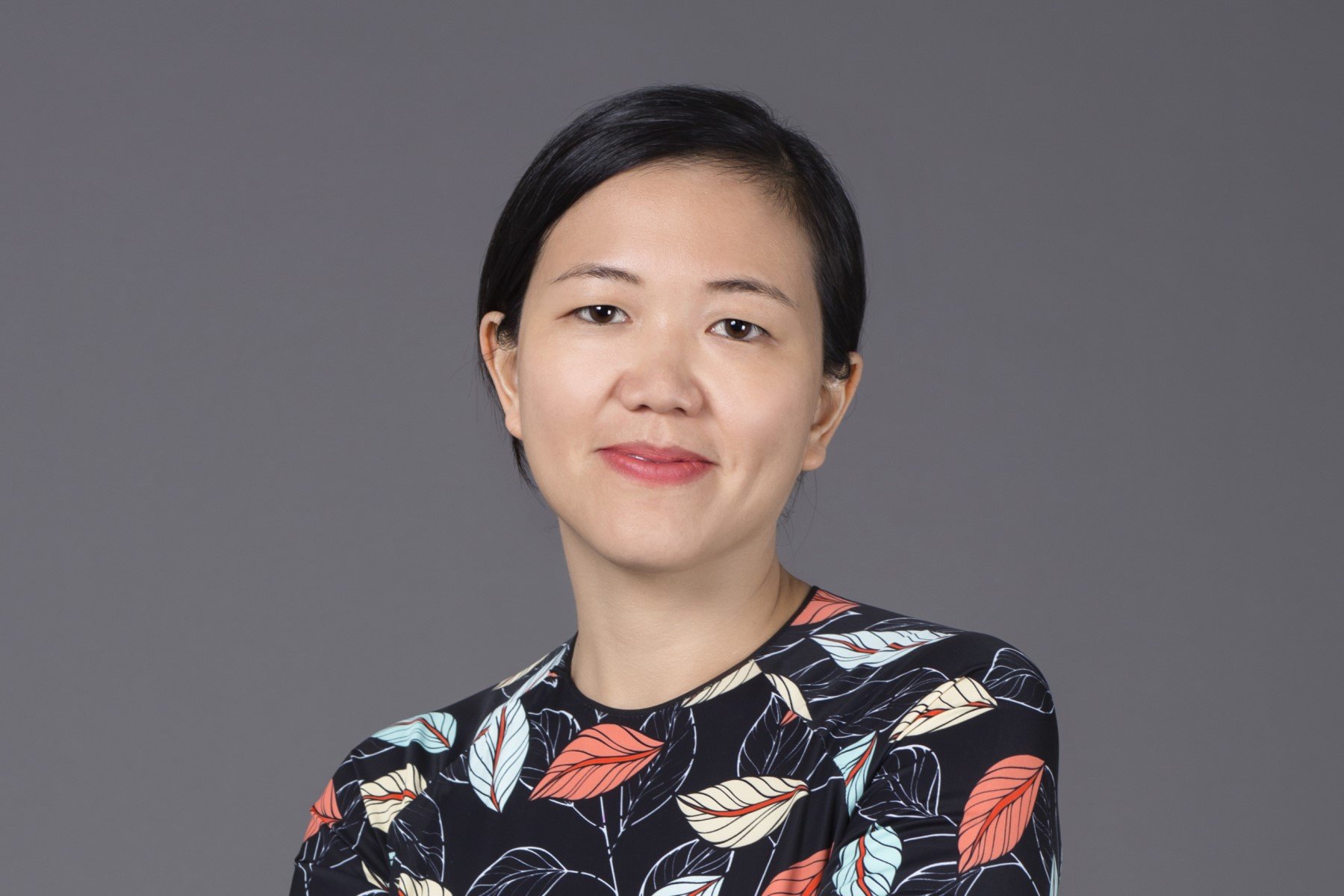
Phi Phi Oanh: “I view ‘sơn ta’, Vietnamese lacquer, as not merely a painting medium but a framework of intersecting relationships.”
Lacquer painting at the intersection of locality, culture, ecology and time
Phi Phi Oanh is a Vietnamese-American artist best known for her experimental approach to the traditional medium of Vietnamese lacquer painting. Her work reflects on cross-cultural histories and situates the medium in a broader art discourse that rethinks categories such as “craft”. Phi Phi has participated in institutional exhibitions such as the 10th Asia Pacific Triennial of Contemporary Art at QAGOMA (2022), ‘Radiant Material’ at National Gallery Singapore (2017) and the 2013 Singapore Biennale ‘If the World Changed’, among others.
This catch-up session focuses on Phi Phi’s ‘Pro Se’ series, which was selected for acquisition into the Singapore Art Museum collection through the SAM S.E.A. Focus Art Fund. Initially commissioned by National Gallery Singapore for the exhibition ‘Radiant Material’, ‘Pro Se’ responds to Nguyen Gia Tri’s ‘Les Fees’ (1963) a landmark work by one of the founding artists of modern Vietnamese lacquer painting. Phi Phi speaks to the processes behind the body of work and the formal connections she drew with art of the past. She also unpacks the themes in her latest work ‘Palimpsest: A Light Exists in Spring’ (2024) which is presented at the Diriyah Contemporary Art Biennale 2024.
We begin by asking Phi Phi about her relationship with Vietnamese lacquer, a medium she describes as “a critical lens” to view society and the natural world.

You have been researching Vietnamese lacquer painting for 20 years. What prompted your interest in this material? Have your motivations shifted since the start of this journey?
At first when I started with lacquer painting, it was an exciting way of discovering my Vietnamese heritage. Later, it became a way to actively participate in this culture. Increasingly, I see it as a critical lens through which to process and view the natural world around us and the society we live in. I now view sơn ta, Vietnamese lacquer, as not merely a painting medium but rather as a framework of intersecting relationships with locality, culture, environment, ecology and time.
Back when I first started working with lacquer painting, any mention of medium in contemporary art was seen as an art world faux pas since post-industrialist logic will consider the concept of the work as most important and how things were produced as secondary, if it is at all considered. How far we have come since then! With climate and technological changes, interest in decoloniality and knowledge of natural resources, awareness about how things, objects and even ideas are produced have become essential to the work itself. It is a good feeling to be on the right side of the times.

Are there techniques or new material combinations you are most excited by today? If so, can you provide examples?
You might be surprised to know that currently, I am obsessed with naturalistic painting through direct observation in tranh sơn mài or Vietnamese lacquer painting. The process inherent to lacquer painting– of layering paint and sanding away– leads to a final image that to me is “hyper-real”. Perhaps not tonally realistic in a photograph, but truer to mirroring the slippery way in which sight and memory works. This goes both for the artist and the viewer. I liken this attempt to capture simultaneity of experience to what the Analytical Cubists were aiming at over a century ago. However, the fragmented views and changing perspectives that were an intellectual exercise in oil painting are somehow inherent to the process of making a naturalistic lacquer work. The process demands repeated sessions of observation and then the deliberate effacing of the work through sanding away – the final resulting painting after polishing is a palimpsest of all those moments. It is a visually rich two-dimensional painting that is ever changing with light. It is an intuitive and visceral process, and I hope to make paintings that can successfully capture this without need for further exegesis.
Currently, these naturalistic terrarium still-life paintings are combined in a series called ‘Pro Se’ where the lacquer boards are shaped like trompe l’oeil digital tablets. The “device” is a device intended to bring to mind our relationship with digital images. I am also excited to watch how lacquer ages alongside the originally referenced tablet.

Your work has been selected through the SAM S.E.A. Focus Art Fund to enter Singapore Art Museum’s collection. What does this mean for you personally and for your practice?
Receiving this recognition from the SAM S.E.A. Focus Art Fund is a wonderful way to commemorate my relationship with Singapore. This relationship began with my participation in the 2013 Singapore Biennale where one of my first works ‘Specula’ was exhibited. Since then, I have been honoured to collaborate in meaningful exhibitions with institutions such as the Singapore Art Museum, National Gallery Singapore and NTU CCA as well as with the FOST Gallery that represents my work.
Also, this pleases me immensely because even though Vietnamese lacquer painting is considered an important national tradition, there are very few examples of it in museum collections in the world. Although the works selected are more like experimental seeds towards new directions rather than iconic, consecrated, and established works, I am grateful they were chosen in celebration of the experimental and risk-taking spirit that has defined lacquer painting in Vietnam.

You are presenting the second iteration of ‘Palimpsest’ at Diriyah Contemporary Art Biennale. Can you talk about how the work has been adapted for this presentation?
‘Palimpsest’ is an installation that combines upcycled obsolete medium format projectors I call “Lacquerscopes” to project lacquer paintings painted on glass through light onto a large screen. Originally, the work is about dematerialisation, shifting scales, and perspective.
In this latest iteration of ‘Palimpsest’, I included an additional element consisting of steamer trunk suitcases made from locally-sourced recycled plastic that are used to pack one of the Lacquerscopes and also serve as the base for the assembled Lacquerscopes on display. The structure and arms of each Lacquerscope and its support resembles a tree with branches, but which has no roots. Collectively they speak about human migration, in particular the burden of carrying around a self-contained sense of home.
The travel stickers on the trunks tell us where the work has physically travelled. At the moment, only stickers from Da Nang and Riyadh have been pasted.

In your opinion, how does it respond to the biennale theme ‘After Rain’ and/or the context of Saudi Arabia?
The main goal of this biennale is to introduce the role that arts play in society and show how different artistic strategies respond to questions such as urban transformation, human dwellings, and coexistence with non-human habitats.
As an artistic strategy, ‘Palimpsest’ treats Vietnamese lacquer painting as a subject and substance belonging to a specific place and culture. It challenges the limits of breadth by adding the Lacquerscope machines and projecting it onto light. This fundamentally changes it while keeping it essentially the same. The paintings on glass remain traditional in the techniques of layering and sanding. These small paintings now live in a self-contained box and its main significance to anyone is in its denomination of origin and capacity to represent a distilled essence of place. All of the above movements mirror the experience of migration and transformation.
I think that even though sơn ta lacquer is specifically a Vietnamese medium, every place has its own significant substances or traditional cultural practices tied to natural habitats. I think the significance of sơn ta lacquer can translate well to visitors of the Biennale, whose relationship to fragrant substances such as Oud or Bakhoor, for example, also goes beyond simply a scent into the realm of the spiritual.
The curators wanted to create an exhibition about regeneration and growth and all intangible things that can signify hope. I can get on board with a proposal like this especially while being deeply aware of the tragedies of destruction and displacement unfolding around us. The slides presented for this edition of ‘Palimpsest’ called ‘A Light Exists in Spring’ were created with this curatorial objective in mind.


What other upcoming projects/exhibitions are you working on?
This year, I continue with my experiments with naturalistic still life compositions of bricks and moss enclosed in a type of Wardian case. This series is called ‘Capriccio’ because they are inspired by that genre of fantastical architectural landscape paintings depicting ruins. FOST Gallery will be presenting these works in fall.
Otherwise, I am also revisiting a work called ‘Armour Piece’, creating an armour composed of parts from different territories, cultures and historical times that have shaped my identity as a person. This would be a sculptural work for an exhibition in October 2024.

Natee Utarit: “At the spiritual level, we are not different at all.”
Thai artist reflects on the conclusion of his six-year-long ‘Déjà vu’ series
Born in 1970 in Bangkok, Natee Utarit is one of the most celebrated contemporary artists in his generation. He is best known for his approach to painting as a means of questioning classical Western genres and art history. His rich compositions often blend elements from different cultures and time periods, as well as symbols that speak to the sociopolitical context of Thailand.
We speak to the artist at the conclusion of his ‘Déjà vu’ series, with two solo shows in Singapore at STPI – Creative Workshop & Gallery and The Private Museum, as well as the group exhibition ‘The Spirits of Maritime Crossing’ (2024) presented as part of the 60th Venice Biennale. The inception of ‘Déjà vu’ came about through a project the artist was invited to work on in Naples in 2018, where he wanted to combine ideas and beliefs from eastern and western cultures. The thought experiment Natee toyed with was: what would it be like if Lord Buddha travelled to the West before the emergence of European civilisation? This question led to a body of work that challenges Eurocentric worldviews and the cultural imprint left by colonialism.
In this conversation, Natee looks back at this six-year-long series and shares his process behind undertaking such an ambitious project. We begin with the bronze sculpture that marked the inception of this series, sharing the same title ‘Déjà vu’. It depicts an encounter between the Buddha and Doryphoros, a classical Greek figure of the spear-bearer. This work succinctly captures the theme of east-meets-west, which runs through the entire project.


Could you say more about where these two figures in ‘Déjà vu’ came from and how they relate to the title?
My initial intention for the sculpture was to show the connection between Greco-Roman culture and that of Asia through the art of the ancient kingdom of Gandhara. But my plans began to evolve once I made a visit to the National Archaeological Museum of Naples. There, I saw an utterly amazing collection of Greco-Roman marble statuary. One of the pieces in particular, a marble spear-bearer (Doryphoros), strongly resonated with me. Looking at it gave me a strange feeling that combined familiarity and distance. It was as if I had seen the sculpture somewhere before a long time ago but could not place it exactly. In fact, various minor elements of several other pieces in the collection gave me the same uncanny feeling. However, the statue of the spear-bearer gave me the most clarity on the nature of this feeling. The image of the sculpture dovetailed nicely with thoughts and feelings I had about certain Buddha images I was familiar with. It was like this Greco-Roman sculpture had been superimposed on a statue of the Buddha. Whether this was merely accidental or whether it was due to the influence of Greco-Roman art on the Buddhist religion, this strange sense of déjà vu allowed me to imagine what it would be like if the Buddha made a trip to Naples. Certain details have been changed in the final work, but the ancient Doryphoros is there in my sculpture of the walking Buddha.


Visiting both your exhibitions at The Private Museum and STPI, one would notice a mirroring of certain motifs and forms. For instance, a fragmented sculpture might be cast in bronze and also paper. While the effect of embroidery in one painting might be translated into flocking into the work produced in collaboration with the STPI’s Creative Workshop. Could you talk more about your experience in this collaboration and how it pushed your thinking?
For me, seeing my major works transformed into printmaking is very interesting. Since I graduated from Silpakorn University with a degree in printmaking in the early 1990s, it has given me a different perspective on printmaking and its possibilities. I see printmaking as a process driven by creativity, planning, and problem-solving. Thus, it excites me when I need to come up with ways to transfer the techniques from a different medium into the language of printmaking. I need to do this while still maintaining the original character of the work and its initial concept. Yet through the collaboration, something new is created and communicated.

The figures or characters who appear in your paintings are based on real people, including friends and acquaintances. What is the reason behind such a method of working?
I usually work from facts and stimuli around me. The same goes for portraits and different meanings arise depending on the specific conditions around the making of the painting. Often, the personality of the subject determines the mood of the image. It is all a process that is based on the truth around me, and it varies based on the angle that I choose to present the story.

The ‘Déjà vu’ series was conceived in 2018, and spanned multiple presentations around the world. Could you share if there are differences in the responses you received from audiences in Southeast Asia and Europe?
I received messages from audiences in Italy where the ‘Déjà vu’ series made its debut. Someone wrote, “After all, we are all the same, not different.” I was very much impressed that my work conveyed messages that could unite two different cultures through overlapping religious beliefs. I believe that this is a meaningful and significant thing as it enables me and other artists from this part of the world to realise the essence of our heritage. It also reduces the cultural gap that has been embedded in our minds since the colonial era in Asia.
The feedback is consistent with that of Asian audiences. There is an attitude of convergence without discrimination or a sense of ridicule from the legacies of history. It shows that all of us, whether we are from the East or West, differ only in our beliefs, geography and lifestyles. But at the spiritual level, we are not different at all.

How do you feel after concluding this six-year-long series?
I think now is the time because I have so many interesting ideas on my waiting list. Actually, while working on the ‘Déjà vu’ series, I have explored new things through offshoots from the series or totally different bodies of work. During this six-year period, there have been both dynamic and calm periods which bring me great happiness.

You tend to work in large cycles of work, such as in the previous series ‘Optimism is Ridiculous’. What is the preparation process like before embarking on them? And how do you sustain your interest or manage your time to see through the project?
What I try to maintain in my artistry is work discipline. I arrive at my studio at 6:30 a.m. every morning and leave at 7 p.m. every day. I think that discipline and consistency are the most important factors in creating the conditions for tangible success, in art and all other pursuits. When working on large-scale ideas with complex and diverse display methods and techniques, great concentration is required to keep us focused. It can be said that you must keep your perception sharp and be ready to work once you encounter inspiration or creative possibilities at any time. Of course, these things may not be directly related to work ethic, but we cannot deny that discipline and consistency helps empower this kind of creative instinct.

Natee Utarit, ‘THE SUPER UNKNOWN – 02’, 2024, oil on canvas, 80 x 60cm. Image courtesy of the artist and Richard Koh Fine Art.
Lastly, could you give us a teaser of your new works which will be presented at S.E.A. Focus 2025?
The 16 pieces in S.E.A. Focus 2025 are developed from ideas that came up as I finished the ‘Déjà vu’ series. They speak to postcolonial ideas through the attitudes and reactions of the young generation today. I chose to represent the images in the style of comic strips and illustrated content. When all the paintings are seen together, they would read like a graphic novel. The outcome is pretty hilarious.
Natee Utarit will be presenting a new body of works at ‘Disconnected Contemporaries’, S.E.A. Focus 2025, represented by Richard Koh Fine Art.
S.E.A. Focus 2025 runs from 18 to 26 January 2025 at Tanjong Pagar Distripark, Singapore.